MAKE.IT.HAPPEN. IN EUROPE: The European PVC Industry Renews Commitment to Competitiveness and Sustainability at the VinylPlus Sustainability Forum 2026
How can Europe reconcile competitiveness and sustainability in an increasingly complex global environment? This was the central question at the 14th VinylPlus Sustainability Forum 2026 (VSF2026), held in Genval, Belgium, on 10-11 June 2026. The event brought together policymakers, UN representatives, NGOs, academics and industry leaders to discuss one of the most pressing challenges facing Europe today.
The Forum took place at a time of profound geopolitical, economic and industrial transformation. Increasing global competition, high energy and raw material costs, and the growing need for resilience and strategic autonomy are challenging Europe’s ability to maintain a strong industrial base while delivering on its climate and circular economy ambitions.
Against this backdrop, under the theme MAKE.IT.HAPPEN. IN EUROPE, the VSF2026 explored how collaboration, innovation and pragmatic policymaking can help secure a competitive and sustainable future for Europe. The Forum progressed from high-level concept presentations to panel discussions, active participant engagement and in-depth thematic roundtables, bringing together internal and external stakeholders to foster shared understanding and develop practical solutions. The event also marked an important milestone for VinylPlus,® the sustainability programme of the European PVC industry, as it celebrates 25 years of continuous progress and action towards sustainability.
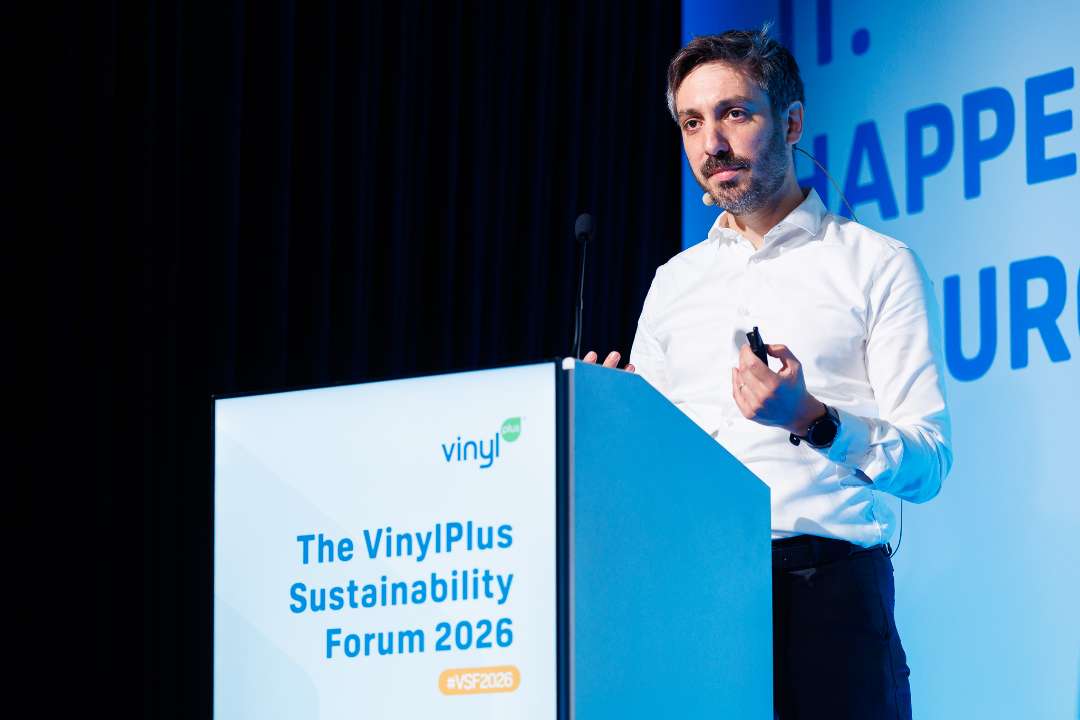
Following a welcome video message of the Belgian Prime Minister Bart De Wever, an inspiring and insightful speech on the future of the European Economy by Gert Peersman, Professor of Economics at Ghent University, set the scene. He highlighted that: "Europe's challenge is not a lack of talent, innovation or scientific excellence. The real challenge is enabling those strengths to translate into globally scaled companies by removing internal barriers, deepening capital markets and creating a truly integrated European market. Europe faces challenges, but the situation is actually much better than perceptions suggest."
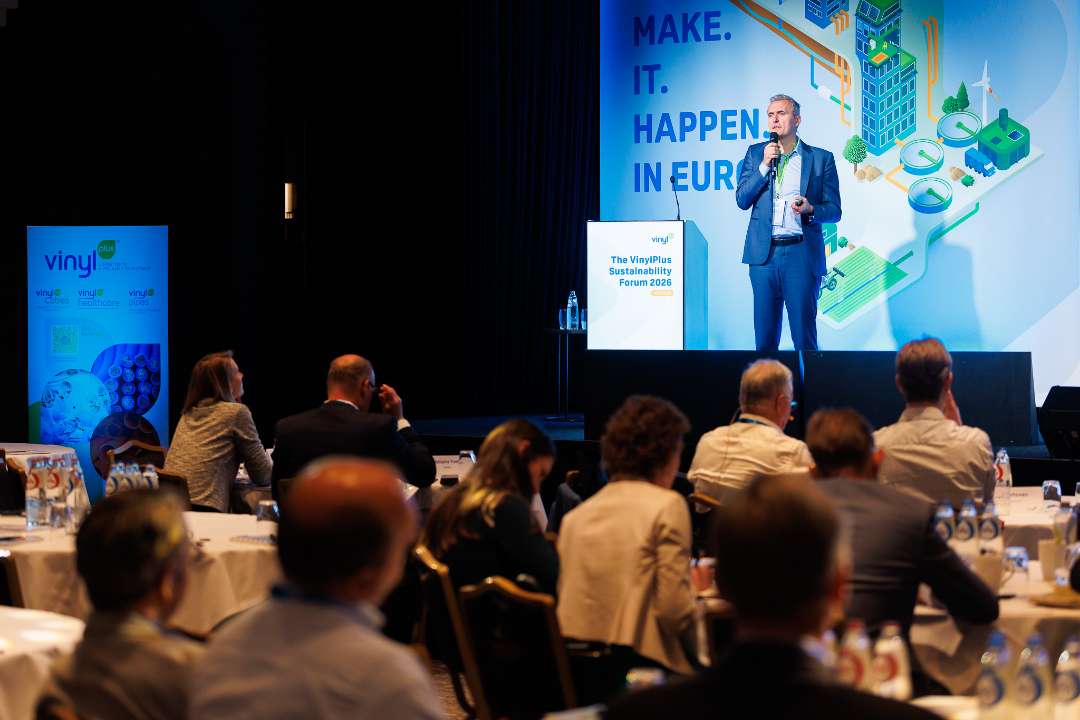
Professor Gert Peersman, Ghent University.
The Forum focused on three themes that are critical to Europe’s future: water resilience, affordable housing and sustainability.
Make. Water Resilience. Happen. In Europe
As climate change, demographic growth and ageing infrastructure place increasing pressure on Europe’s water systems, ensuring reliable access to clean water is becoming a strategic priority for resilience, competitiveness and public wellbeing.
Modern, efficient and durable infrastructure will be essential to building water-resilient communities. The PVC value chain contributes to this objective through long-lasting, corrosion-resistant and low-leakage piping systems that support both drinking water and wastewater networks, helping reduce water losses, maintenance requirements and resource waste.
As Christophe Yvetot, UNIDO Representative to the European Union, stated: “Water is rapidly becoming one of the defining factors of industrial competitiveness. As droughts intensify, infrastructure ages, and global demand for water continues to rise, we must rethink how we manage this strategic resource. Wastewater should no longer be seen as a waste stream, but as a resource stream that can drive efficiency, resilience, and growth. Building water resilience requires more than infrastructure alone; it demands circular resource management, sustainable industrial practices, strong institutions, and international cooperation. By working together, organisations such as UNIDO and VinylPlus can help advance solutions that reduce pressure on scarce water resources, strengthen supply chains, support climate adaptation, and promote competitive and sustainable industrial development in Europe and beyond.”
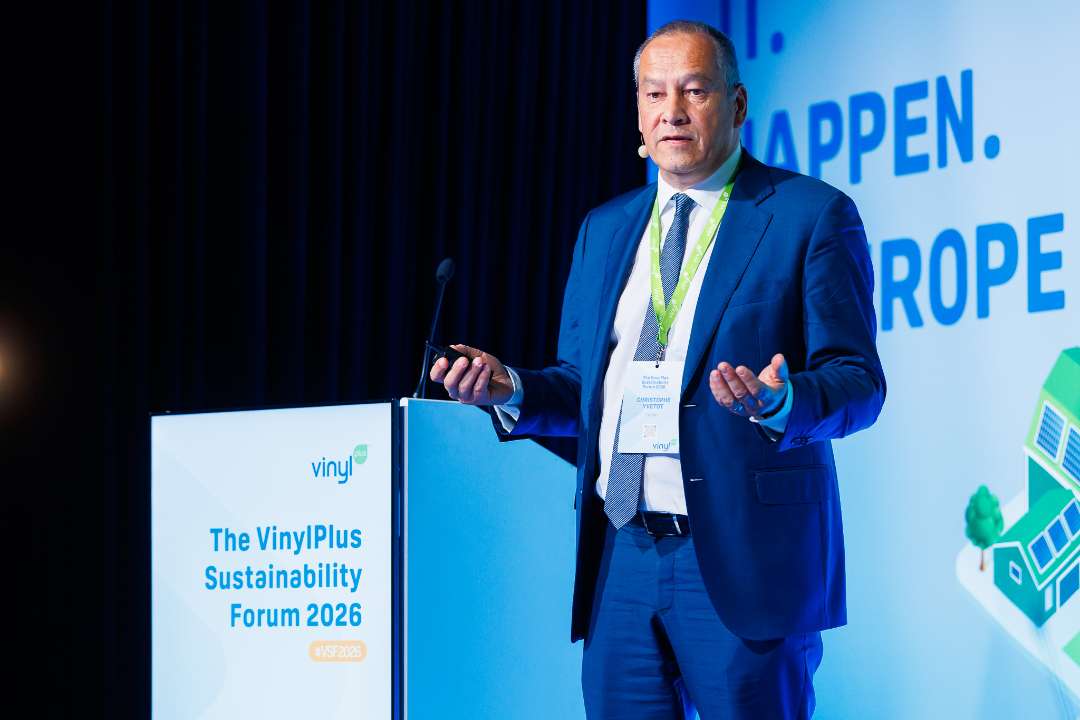
Christophe Yvetot, UNIDO.
Make. Affordable Housing. Happen. In Europe
Providing affordable, safe and energy-efficient housing remains a growing challenge across Europe. Rising construction costs, ageing building stock and increasing demand are putting pressure on both public and private investment.
Addressing these challenges requires durable, cost-effective and sustainable construction solutions. PVC products, including window profiles, flooring, cables, waterproofing membranes and piping systems, contribute to affordable housing through their durability, energy efficiency, long service life and recyclability.
Highlighting the role of the construction ecosystem in addressing Europe’s housing needs, Pieter Staelens, Head of Sector for Sustainable Construction at DG GROW, European Commission, said: “The EU Strategy for Housing Construction aims to unlock the full potential of the construction ecosystem, to make it easier for all actors involved to do business and become more innovative and productive, and to be better equipped to deliver the housing supply needed. The industrial pillars of the Housing Package consist of simplifying and digitalising; access to raw and secondary materials; supporting innovation and scaling up construction value chains; and access to services and skills. The revised VinylPlus 2030 Commitment, which promotes circularity, increased use of recycled materials, innovation, resource efficiency and sustainable product development, aligns with these priorities.”
Pieter Staelens, European Commission.
Make. Sustainability. Happen. In Europe
For 25 years, the European PVC value chain has demonstrated that industrial competitiveness and sustainability can advance together. Through VinylPlus, the industry has pioneered voluntary action, delivering measurable progress in circularity, resource efficiency and responsible product stewardship.
Today, with VinylPlus 2030, the industry's third ten-year Commitment to sustainable development, the PVC value chain continues to support the transition towards a more circular and climate-neutral economy while continuing to contribute to European manufacturing and innovation.
Commenting on the programme’s latest achievements, Charlotte Röber, Managing Director of VinylPlus, stated: “Our 2025 results demonstrate the resilience and determination of the European PVC value chain. In a difficult market environment, our industry delivered tangible results. Thanks to well-established European collection and recycling value chains and a functioning market for recycled material, PVC recycling volumes increased by 5.7%. We continued to make measurable progress on our climate and sustainability goals based on technical projects and scientific third-party studies. These results reinforce the value of long-term collaboration and confirm that VinylPlus and the PVC value chain remain at the forefront of delivering practical solutions in Europe and for Europe.”
A key highlight of the VSF2026 was the official launch of the revised VinylPlus 2030 Commitment, following a comprehensive mid-term review conducted in 2025 and early 2026. The review assessed progress against the programme’s targets while considering evolving regulatory, technological and market developments.
The revised Commitment reinforces the industry’s long-term ambitions while introducing greater flexibility to respond to a rapidly changing operating environment. It maintains a strong focus on circularity and carbon reduction, including the objective of using at least one million tonnes of recycled PVC in new products by 2030. It also strengthens the emphasis on product sustainability, life-cycle performance and contributions to climate objectives.
By focusing more strongly on measurable outcomes and real-world impact, the revised framework further positions VinylPlus as a proactive partner in delivering sustainable solutions that support Europe’s competitiveness, resilience and environmental ambitions.
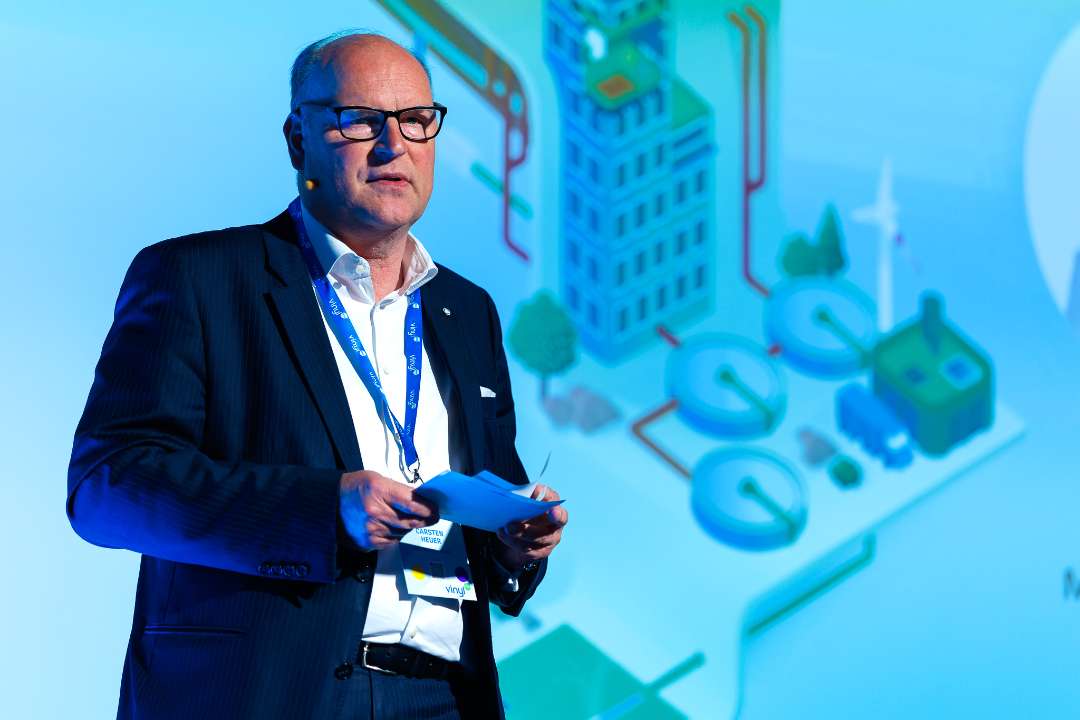
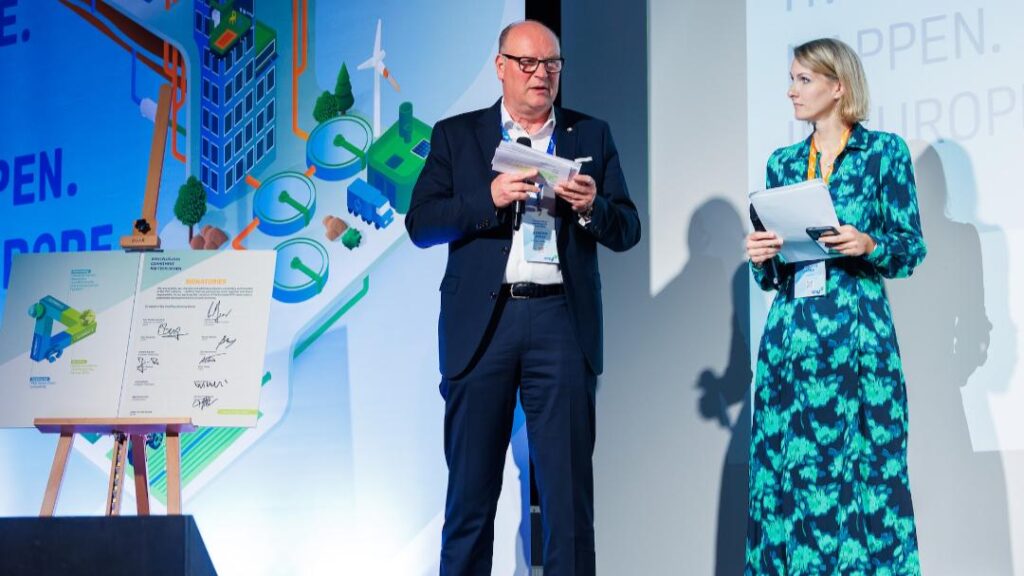
Carsten Heuer, Vice-Chairman of VinylPlus.
Concluding the Forum, Carsten Heuer, Vice-Chairman of VinylPlus, remarked: “Over the past year, we have taken important steps to strengthen VinylPlus for the future, refining our strategy, enhancing our organisation, and reaffirming our commitment to science-based action, circular material management and meaningful stakeholder engagement. Our revised 2030 Commitment reflects both the progress we have achieved and the ambition that still drives us forward. By combining flexibility with clear, measurable outcomes, we are accelerating our contribution to circularity, carbon reduction, and sustainable product innovation. Together, we are reinforcing VinylPlus as a trusted partner for society, helping to build a more competitive, resilient, and sustainable European industry.”
As Europe seeks to strengthen its industrial base while advancing its sustainability objectives, a day and a half of lively panel discussions and roundtables at the VSF2026 delivered a clear message: competitiveness and sustainability are mutually reinforcing. Through cooperation between industry, policymakers, academia and civil society, Europe can create the conditions for both to thrive. The revised VinylPlus 2030 Commitment reflects the PVC industry’s determination to remain an active contributor to that future.