
Competitiveness and Strategic Autonomy
PVC is part of Europe’s industrial fabric. It supports essential sectors such as construction, infrastructure, healthcare, energy distribution, transport, packaging and manufacturing.
A strong European PVC value chain helps ensure that these applications can continue to be produced, used, collected and recycled in Europe. This matters for competitiveness, but also for Europe’s wider resilience, circular economy and strategic autonomy.
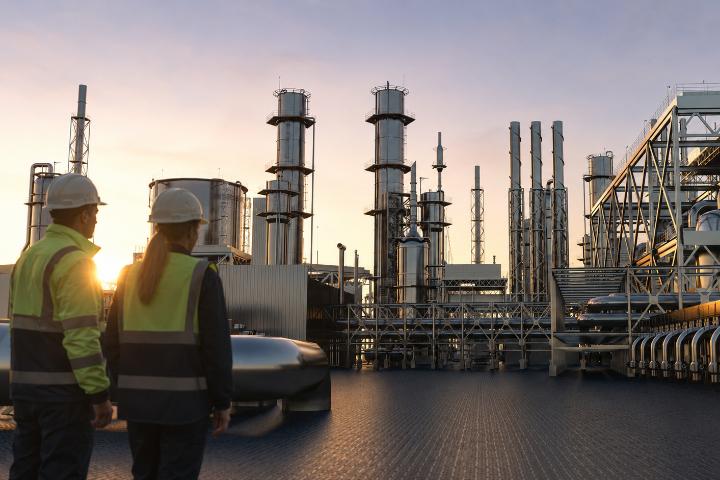
PVC is closely connected to Europe’s chemical industry, including the chloro-alkali sector. Maintaining production, conversion and recycling capacity in Europe supports skilled jobs, industrial know-how, circular material flows and investment in sustainable innovation.
Why PVC Matters for Europe
Essential Applications
PVC is used in products that support everyday life and essential services, from drinking water pipes and energy-efficient windows to medical devices, cables, flooring and roofing membranes.
Circularity at Scale
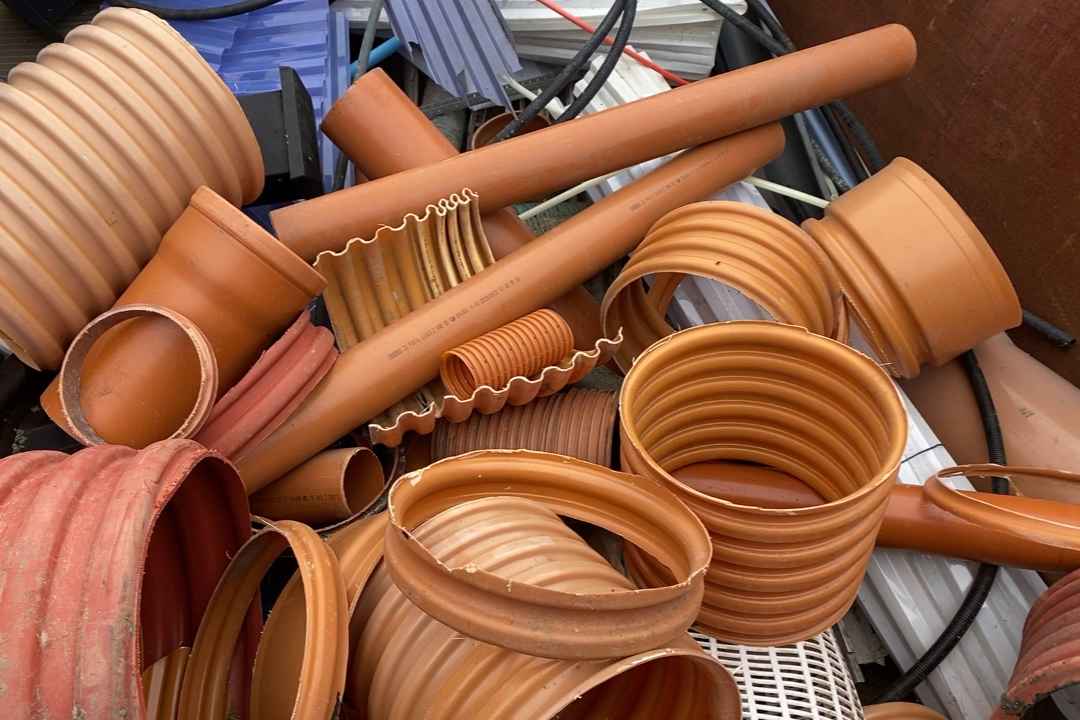
PVC recycling depends on functioning European collection systems, recycling infrastructure, traceability and markets for recycled PVC. A strong industrial base is essential to keep these circular systems working.
A European Value Chain
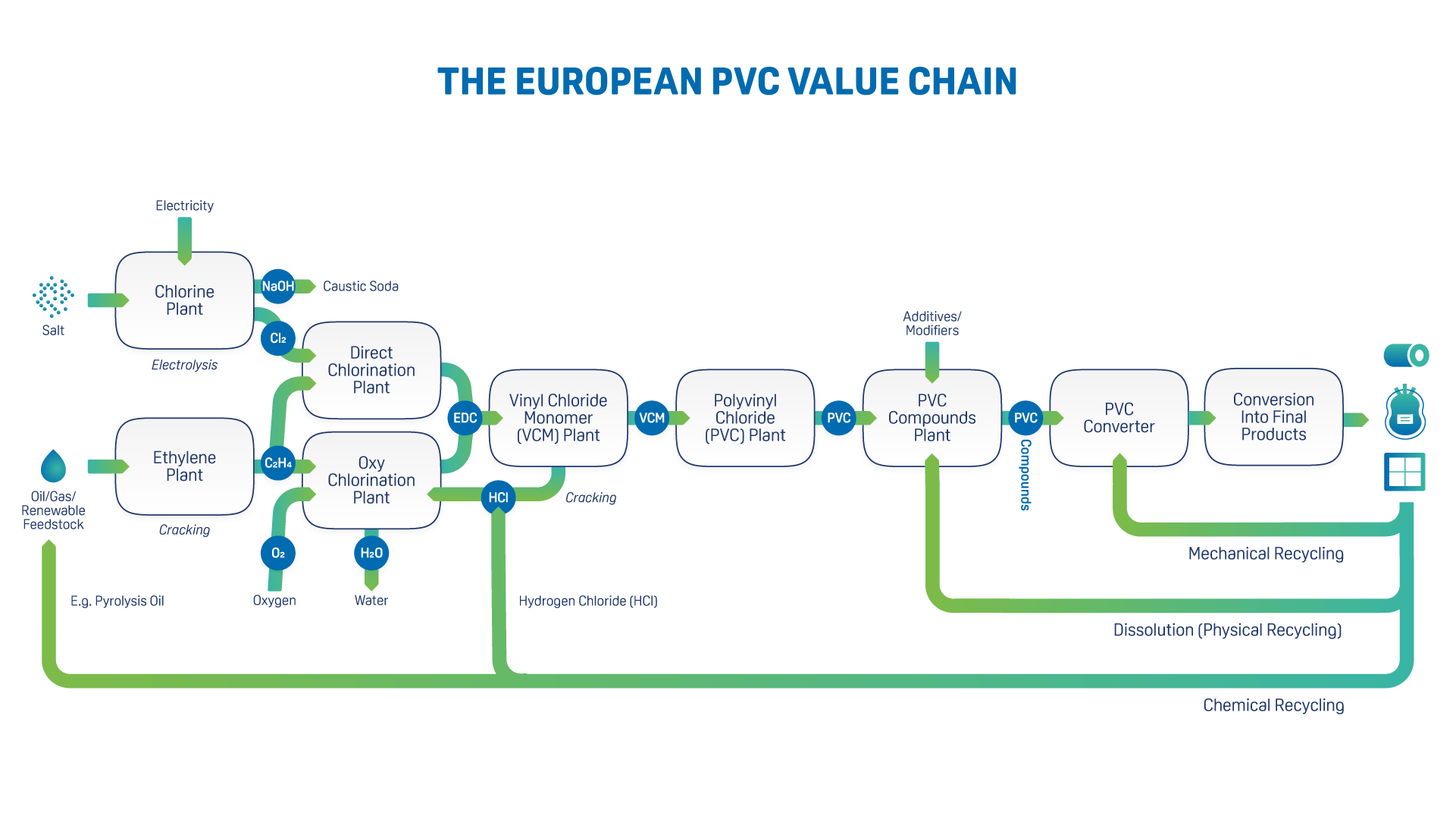
The European PVC value chain includes raw material production, conversion, product manufacturing, collection, sorting and recycling. Keeping this capacity in Europe supports resilience and reduces dependency on imported products.
Strategic Chemical Links
PVC production is connected to the chloro-alkali sector, which produces chlorine, caustic soda and hydrogen. This makes PVC part of a wider industrial ecosystem that is important for Europe’s strategic autonomy.

A Material for a Resilient Europe
PVC contributes to European resilience because it combines performance, durability, affordability and recyclability across many long-life applications.
In construction, infrastructure, healthcare, and food supply, PVC supports essential systems — from windows, pipes, cables and roofing membranes to water supply, power distribution, medical devices, rescue gear, hoses and conveyor belts.
These applications show why PVC should not be viewed only as a material, but as part of the systems that support modern European society.
European Production and Circularity Belong Together
Circularity depends on a strong industrial base. PVC products can be collected, sorted and recycled, but these systems require European converters, recyclers, certification schemes and end markets for recycled PVC.
If production and conversion capacity move outside Europe, it becomes harder to close material loops within Europe. Recycling capacity, quality control, traceability and investment in new technologies all depend on a viable European value chain.
Maintaining PVC production and recycling in Europe therefore supports both industrial competitiveness and the circular economy.
Why Strategic Autonomy Matters
Strategic autonomy means that Europe can maintain access to the materials, products and industrial capabilities that are essential for society and the economy.
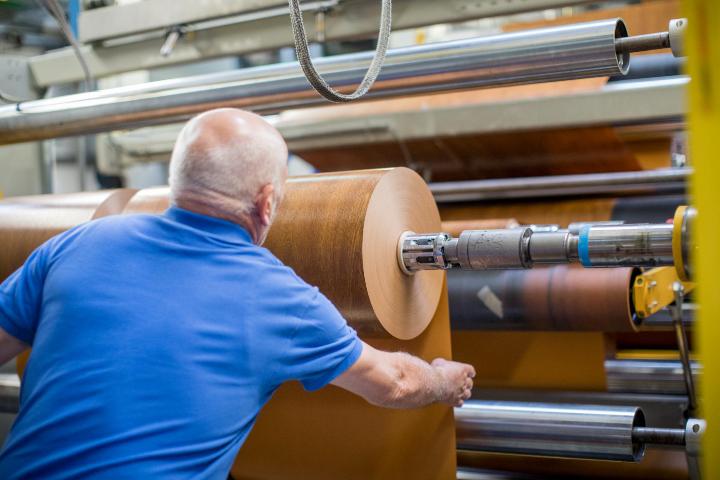
For PVC, this means maintaining the ability to produce and recycle critical applications in Europe — including products used in housing, water infrastructure, healthcare, energy systems and other essential sectors.
A resilient European PVC value chain helps reduce dependency on imported products, supports skilled jobs and strengthens Europe’s ability to invest in safer, more circular and lower-carbon solutions.
Connected to VinylPlus
VinylPlus brings together the European PVC value chain to advance circularity, improve environmental performance, strengthen transparency and support responsible production and use.
Through collection and recycling schemes, certification, innovation projects and stakeholder engagement, VinylPlus helps ensure that PVC remains part of Europe’s transition towards a more circular and resilient economy.
Explore More
Policy: Competitiveness
See VinylPlus’ policy priorities for a competitive and circular European PVC value chain.
Circular PVC Lifecycle
Explore how PVC products are produced, used, collected and recycled.
Strategic Applications
Discover how PVC supports housing, healthcare, infrastructure, energy and other European priorities.
Certification and Traceability
Explore how verified schemes support transparency, responsible sourcing and circular PVC products.
Progress Towards the Commitment
Follow progress under the VinylPlus 2030 Commitment.