Circular Economy and Waste
Circularity is central to the VinylPlus 2030 Commitment. The European PVC value chain has developed established systems for collection, sorting, recycling, traceability and verified reporting.
To scale PVC recycling further, EU waste policy must support separate collection, efficient transport of waste for recycling, clear end-of-waste criteria, investment in recycling technologies and market demand for recycled PVC produced in Europe.
VinylPlus supports a coherent policy framework that keeps recyclable PVC waste in the circular economy and helps Europe retain the value of materials, jobs and recycling capacity.

Why Waste Policy Matters
01. Circularity Starts With Collection
PVC products can only be recycled if they are identified, collected and sorted correctly. Separate collection close to the source helps preserve material value and improves the technical and financial efficiency of recycling.
02. Recycling Needs Functioning Markets
European recyclers need stable demand for recycled PVC. Market pull, recycled-content incentives and recognition of materials recycled in Europe are essential to support investment and maintain recycling capacity.
03. Policy Must Enable Circular Value Chains
Circularity depends on coherent rules across product design, waste classification, transport, recycling, traceability and end-of-waste status. Inconsistent rules and fragmented implementation across the EU can delay investment and reduce recycling performance.
VinylPlus Policy Priorities
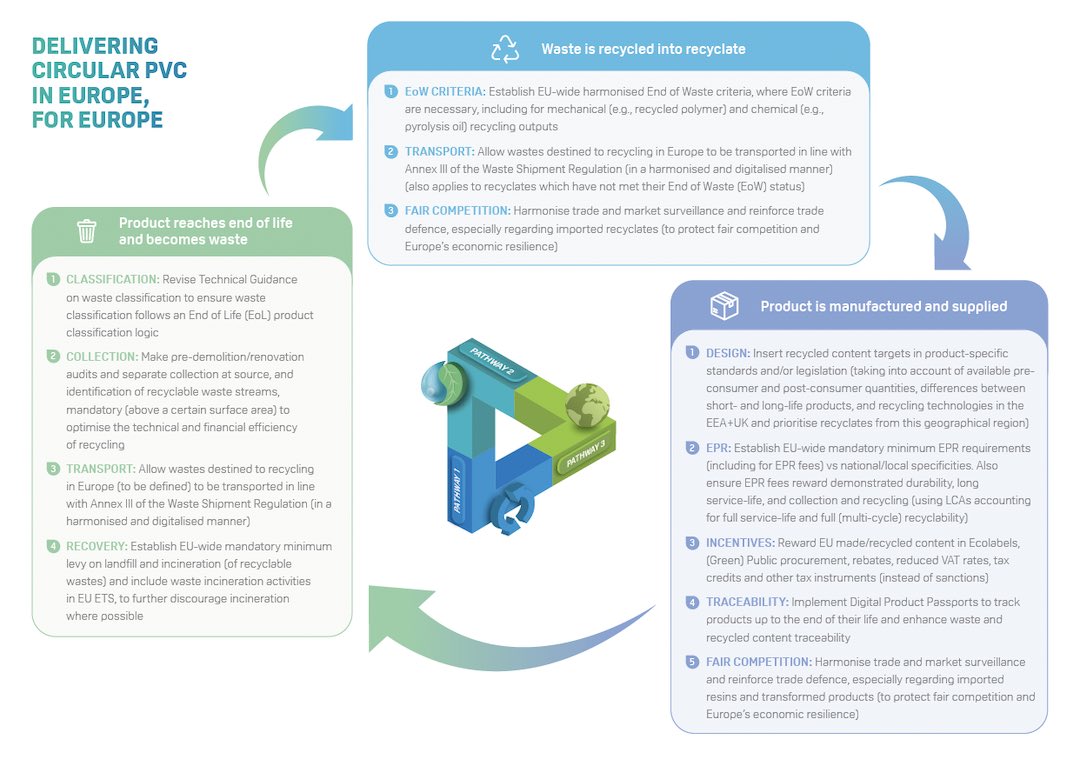
The VinylPlus consultation response on the Circular Economy Act focuses on making circularity work across the full PVC lifecycle: from product design and end-of-life classification to collection, recycling, traceability, market demand and fair competition.
The priorities below summarise the key policy conditions needed to keep recyclable PVC waste in the circular economy and support recycled PVC made and used in Europe.
Relevant EU Policy Files
VinylPlus monitors and contributes to EU policy files that shape circular PVC value chains, including:
- Circular Economy Act
- Waste Framework Directive
- Waste Shipment Regulation and green-listing of waste
- End-of-waste criteria
- Extended Producer Responsibility (EPR)
- Landfill and incineration policy
Recycling in Europe: Progress and Pressure
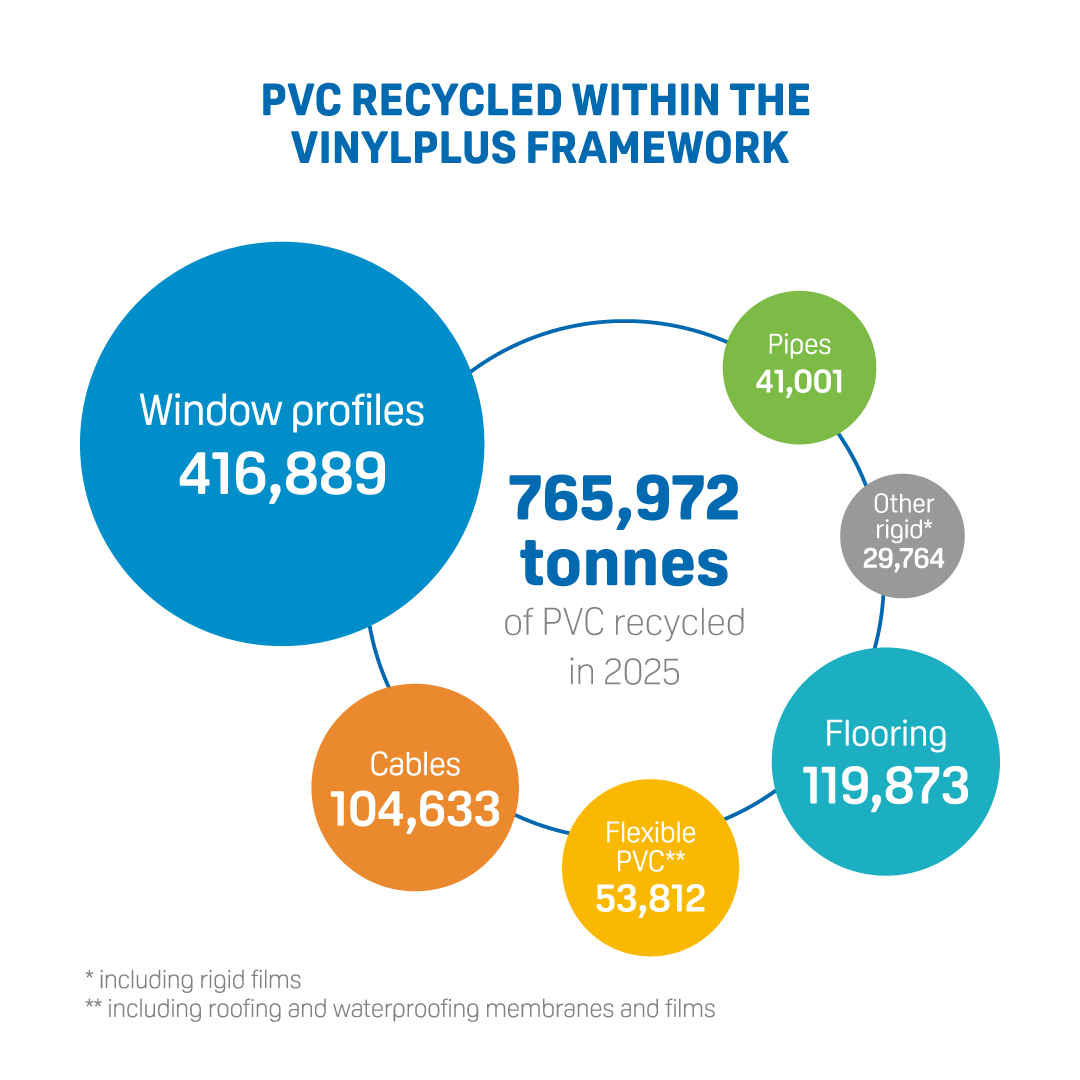
PVC recycling has shown resilience despite a difficult market environment for European plastics recycling. Within the VinylPlus framework, 765,972 tonnes of PVC waste were recycled in 2025, a 5.7% increase compared with 2024.
Since 2000, 10.3 million tonnes of PVC have been recycled, saving 20.6 million tonnes of CO₂. The total uptake of recycled PVC registered in RecoTrace by converters (which does not represent the totality of European PVC converters) reached 508,109 tonnes in 2025.
At the same time, European recycling markets remain under pressure from lower virgin material prices, low-priced imports, regulatory complexity and weak demand for EU-produced recyclates. Waste policy must therefore help create stable conditions for investment in recycling and uptake of recycled material.
Construction and Demolition Waste
Building and construction applications account for a major share of PVC use and recycling. PVC products such as windows, pipes, cables, flooring and membranes are durable, recyclable and often remain in use for decades before becoming available for recycling.
To improve circularity in construction, waste management should start before demolition or renovation begins. Pre-demolition and pre-renovation audits, separate collection and source-level sorting can help retain the value of recyclable PVC and prevent valuable recyclable material from being incorrectly mixed, lost to landfill or incineration.

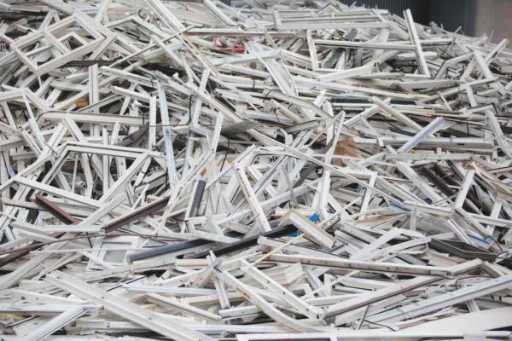
Pre-Demolition Audits
Identify recyclable PVC components before demolition or renovation starts.
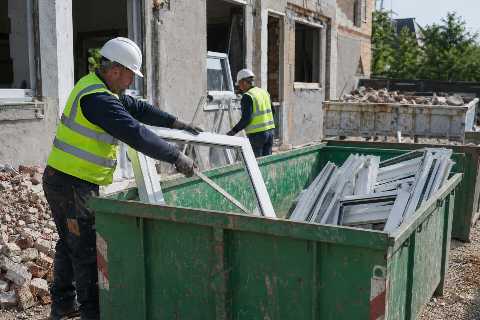
Separate Collection
Keep PVC waste streams clean and suitable for high-quality recycling.
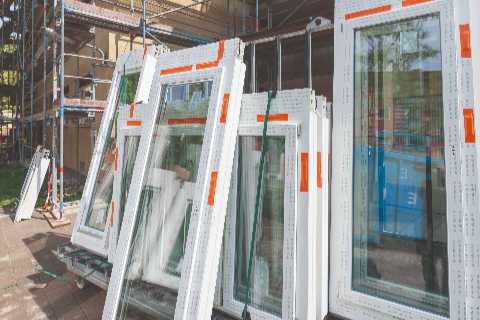
Source-Level Sorting
Support contractors in retaining the value of recyclable materials.
Circular Construction Markets
Favour the use of durable, long-life, and recyclable products in building and construction, as well as those meeting recycled content thresholds.
VinylPlus and the Circular Plastics Alliance
VinylPlus contributes to EU-level discussions on plastics circularity, recycling markets and the conditions needed to scale recycled materials in Europe.
Through engagement with initiatives such as the Circular Plastics Alliance, VinylPlus supports a stronger framework for collection, recycling, market surveillance and demand for recycled plastics.
Connected to the VinylPlus 2030 Commitment
Circular economy and waste policy are central to the VinylPlus 2030 Commitment. Through collection schemes, Recovinyl, RecoTrace, recycling projects and verified reporting, VinylPlus supports the transition towards a more circular PVC value chain.
The revised Commitment keeps a strong focus on circularity and carbon reduction, including the objective of achieving at least one million tonnes of recycled PVC used in new products by 2030.
Explore Related Policy and Action Areas
Competitiveness is closely linked to circularity, chemicals regulation, climate policy, construction, procurement and verified sustainability performance. Explore how VinylPlus connects policy engagement with practical action across the PVC value chain.
Circular PVC Lifecycle
Understand how PVC moves from production and use to collection, recycling and new products.
Circularity
See how VinylPlus supports collection, recycling and verified reporting across the PVC value chain.
Detection and Sorting Technologies
Learn how innovation supports better sorting and safe recycling of PVC waste streams.
Advanced Recycling
Explore complementary technologies for complex or difficult-to-mechanically-recycle PVC waste.
Certification and Traceability
Explore how verified schemes support transparency, responsible sourcing and circular PVC products.
Competitiveness
Learn why European recycling capacity depends on fair competition, investment and resilient value chains.