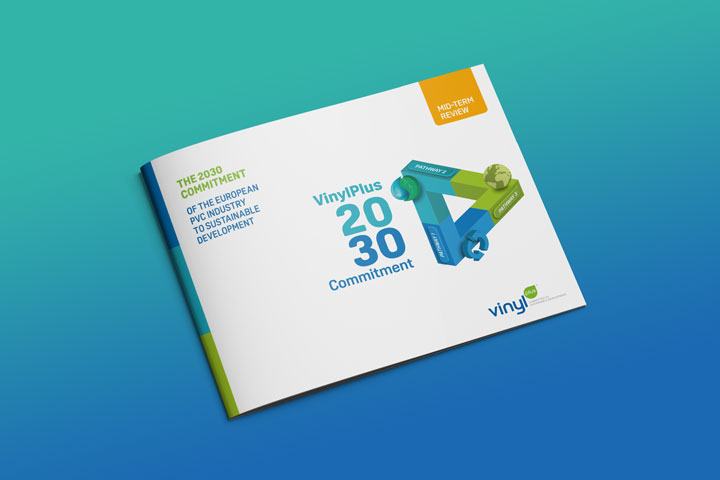
VinylPlus 2030 Commitment
A renewed roadmap for a circular, competitive and responsible PVC value chain in Europe.
VinylPlus 2030 is the European PVC industry’s commitment to sustainable development towards 2030. Building on more than 20 years of progress, it brings together the PVC value chain to scale up circularity, reduce environmental impacts, strengthen transparency and support a resilient European industry.
Following a mid-term review in 2025, the revised Commitment refines the programme’s targets and strengthens its focus on measurable progress, implementation, policy coherence and value chain collaboration.
About VinylPlus 2030
Launched in 2021, the VinylPlus 2030 Commitment sets out the European PVC industry’s shared roadmap for sustainable development across the EU-27, Norway, Switzerland and the UK. It builds on two decades of voluntary action, independent monitoring and verified reporting.
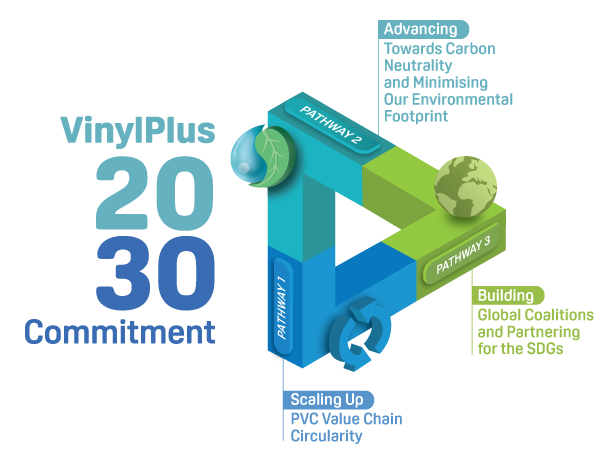
The Commitment is structured around three Pathways covering circularity, environmental performance and stakeholder partnerships. Together, they guide practical action across the PVC value chain — from raw materials and production to product design, use, collection, recycling and traceability.
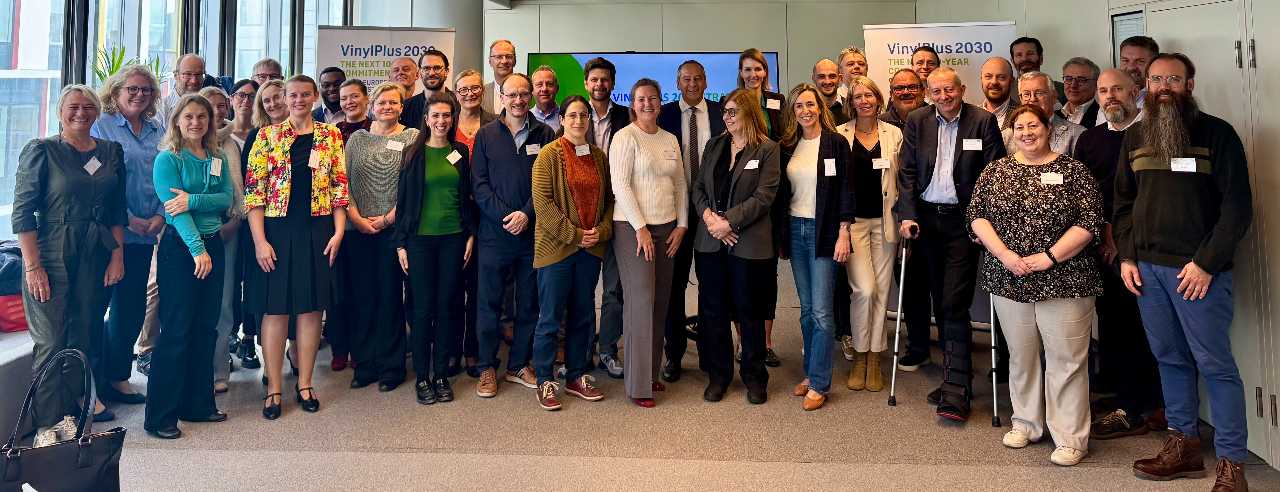
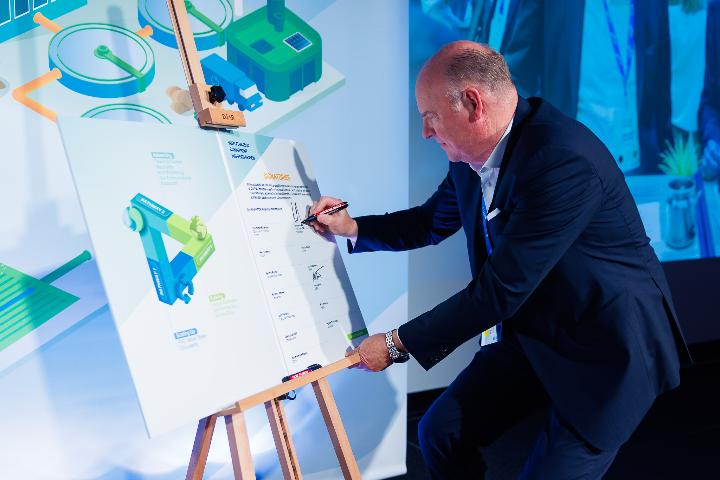
Revision Workshop in Brussels, 2025.
Mid-Term Review to Stay Relevant
VinylPlus carried out a mid-term review of the 2030 Commitment in 2025. The purpose was to refine the targets in light of industry performance, market conditions, EU policy developments and VinylPlus’ updated strategic direction.
The review was coordinated by a dedicated Revision Task Force and involved stakeholders from across the PVC value chain, policymakers, NGOs, academia and external experts.
The review was publicly announced at the VinylPlus Sustainability Forum 2025, followed by a high-level stakeholder consultation in Brussels in October 2025. The revised 2030 Commitment was officially launched at the VinylPlus Sustainability Forum 2026 in June.
What the Updated Commitment Strengthens:
Implementation
A stronger focus on practical delivery, market uptake and measurable progress towards 2030.
Circularity
Continued ambition to increase PVC recycling, improve collection schemes, support sorting technologies and keep valuable materials in controlled loops.
Competitiveness
Recognition that circularity, sustainability and European industrial resilience must be addressed together.
Policy Coherence
A stronger focus on coherent EU policy frameworks that enable circularity, investment, traceability, safe recycling and a level playing field for European industry.
Science-Based Decision-Making
Stronger focus on harmonised LCA data, carbon footprint and handprint assessment, additive evaluation and transparent methodologies.
Certification, Traceability and Partnerships
A broader role for the VinylPlus® Product Label, the VinylPlus® Supplier Certificates, public reporting, traceability, university collaboration, global cooperation and partnerships with market actors.
Insights from the VinylPlus Committee Chairs
Daniel Andreas, Chair of the VinylPlus Commitment Committee and Head of Sustainability at Schüco Polymer Technologies
Explains how the VinylPlus 2030 Mid-Term Review refines the roadmap for the next phase of implementation — with a stronger focus on circularity, recycling technologies, carbon footprint, traceability, certifications and partnerships.
Myriam Tryjefaczka, Chair of the VinylPlus Advocacy Committee and Director Sustainability and Public Affairs EMEA at Tarkett
Explains why the revision of the VinylPlus 2030 Commitment was planned from the outset, how the process challenged each element of the Commitment, and how the updated roadmap strengthens accountability, KPIs and implementation towards 2030.
The Three Pathways

Pathway 1: Scaling Up PVC Value Chain Circularity
VinylPlus will continue to accelerate circularity by supporting PVC recycling, improved collection schemes, advanced sorting and complementary recycling technologies for waste streams that cannot be mechanically recycled.
1.1. Advancing Our Circularity Ambitions
- Achieve the use of at least 1 million tonnes of recycled PVC per year in new products by 2030, complemented by a measurable circularity target linked to PVC waste availability and managed through a dedicated circularity KPI framework.
- Support the targeted set-up and improvement of additional collection, and recycling schemes across Europe and assess their performance in terms of increased amounts of PVC waste recycled by 2030.
- By 2030, VinylPlus will prioritise supporting technologies for detection and sorting of specific substances in PVC waste streams which should achieve Technology Readiness Level (TRL) 7, to remove additives preventing recycling and not managed in controlled loops already.
1.2. Supporting Innovative Recycling Technologies
- By 2030, assess and document potential and impact of chemical and solvent-based recycling for PVC that cannot be recycled mechanically, including circular outlets for chlorine from PVC waste processing.
- By 2030, test and validate at least one material- separation technology at TRL 5 for complex (e.g., composite or multilayer) PVC waste, with prioritisation based on traceability insights and relevance of waste streams.
1.3. Prioritising Circularity Through Ecodesign
- From 2026, report annually on VinylPlus partners’ ecodesign progress per application sector.
Pathway 2: Advancing Towards Carbon Neutrality and Minimising the Environmental Footprint
VinylPlus will support the PVC value chain in reducing environmental impacts through product-specific carbon footprint reporting, carbon handprint assessment, sustainable use of additives, LCA-based performance data and updated production standards.
2.1. Advancing Towards Carbon Neutrality
- By 2030, VinylPlus will report on product-specific carbon footprints to monitor progress on the pathway to net zero against previously established baselines as the reference for PVC value chain greenhouse gas emissions.
- By 2030, VinylPlus will evaluate and report on the projected carbon handprint of selected PVC products, assessing their potential contribution to greenhouse gas emission reductions in other sectors (such as the building sector).
2.2. Embracing the Sustainable Use of Chemical Substances
- Assess the sustainability of substances in a product-specific context, considering functionality, performance, and end-of-life implications compared to proposed alternatives.
- Continue the expansion of the Additive Sustainability Footprint (ASF) methodology by supporting its application across additional PVC sectors and substance classes, with the aim to embed it as a recognised sustainability decision-making tool by 2030.
2.3. Minimising Our Environmental Footprint
- Achieve full compliance with the ECVM Charter (European PVC resin production) (updated version 2025).
- Minimise the environmental footprint of PVC placed on the European market by promoting the environmental standards of the ECVM Charter for PVC importers serving the European market.
- By 2030, collect and consolidate environmental performance data (through harmonised Life Cycle Assessment (LCA)) for the main PVC products across agreed indicators and life cycle stages, with a focus on raw material and recyclate footprints. Update and benchmark these values through a repeat of a representative industry study to define and track the industry-wide PVC footprint.
- Develop a harmonised methodology to assess and monitor PVC powder emissions across the PVC value chain, covering resin production, conversion and recycling activities.
Pathway 3: Building Global Coalitions and Partnering for the SDGs
VinylPlus will continue to strengthen transparency, certification, traceability and stakeholder engagement, while sharing the European PVC sustainability model internationally.
3.1. Ensuring Transparency and Accountability
- A public, and independently audited, VinylPlus Progress Report will be published annually and proactively promoted to key stakeholders.
3.2. Contributing to Sustainable Development Through Certified and Traceable Products
- Extend the scope of the VinylPlus Value Chain Sustainability Certifications (VinylPlus® Product Label and VinylPlus® Supplier Certificates).
a. For Building and Construction (B&C) products: align the Product Label requirements with the European Level(s) framework, strengthen recognition in public and private procurement systems, and provide annual reporting. For non-B&C products: ensure recognition in at least three relevant procurement systems.
b. Ensure that every part of the value chain — including recyclers, compounders, resin producers, additive suppliers, and all application sectors — can qualify for and obtain either the VinylPlus® Product Label or the VinylPlus® Supplier Certificate.
3.3. Engaging Stakeholders in the Sustainable Transformation of the PVC Industry
- Co-operate with regional and global value chain bodies to exchange best practices, communicate the VinylPlus sustainability model internationally, and explore how European sustainability approaches can be transferred to other regions of the world. Annually report on progress.
3.4. Partnering With Stakeholders
- Engage with universities, including students and researchers, on joint projects for sustainable development and provide annual reporting.
- By 2030, develop partnerships with three consumer-facing global brand owners or private sector sustainability leaders to progress on one or more of the Sustainable Development Goal (SDG) targets.
Enabling the Transition
The revised Commitment also identifies enabling factors that can support the transition towards circularity, climate neutrality and sustainable industrial development.
These include coherent EU policy frameworks, improved market conditions for recycled materials, traceability through Digital Product Passports, harmonised methodologies for product carbon footprints and life-cycle assessment, efficient waste shipment rules, and support for investment in collection, sorting and recycling technologies.
At the same time, achieving the 2030 targets will require strong cooperation across the PVC value chain, public authorities, academia, research organisations and market actors.
Evolving the VinylPlus Commitment
Since the VinylPlus 2030 Commitment was launched in June 2021, the European PVC value chain has continued to advance circularity, innovation, transparency and stakeholder engagement — despite challenging market conditions, pressure on recycling and wider industrial competitiveness issues.
Launch of revised 2030 Commitment
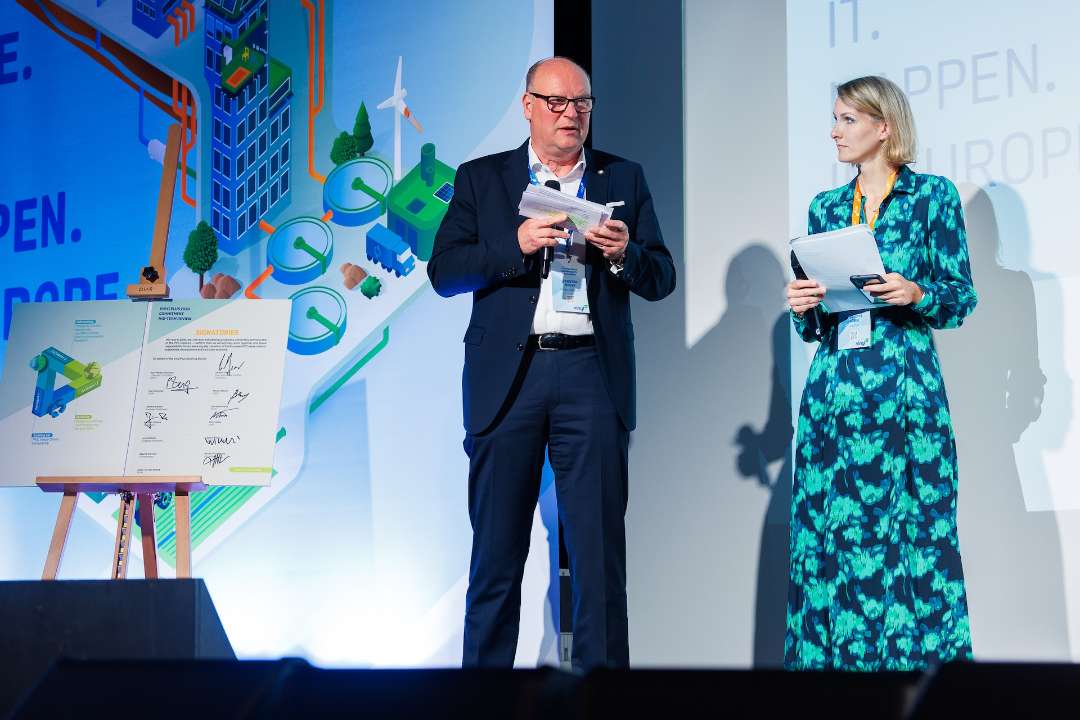
The revised VinylPlus 2030 Commitment was officially launched at the VinylPlus Sustainability Forum 2026 in June, following a mid-term review carried out in 2025.
The review refined the Commitment in light of industry performance, market conditions, EU policy developments and VinylPlus’ updated strategic direction. Coordinated by a dedicated Revision Task Force, the process involved stakeholders from across the PVC value chain, including policymakers, NGOs, academia and external experts.
The revised Commitment strengthens VinylPlus’ focus on practical implementation, circularity, competitiveness, policy coherence, science-based decision-making and value chain collaboration towards 2030.

10.3M tonnes recycled since 2000
PVC recycling remained resilient in 2025, with 765,972 tonnes of PVC waste recycled within the VinylPlus framework — a 5.7% increase compared with 2024.
Since 2000, the European PVC value chain has recycled 10.3 million tonnes of PVC, saving an estimated 20.6 million tonnes of CO₂ and contributing to sustain 1,500+ direct jobs in European recycling plants.
White paper on pyrolysis of PVC-containing waste
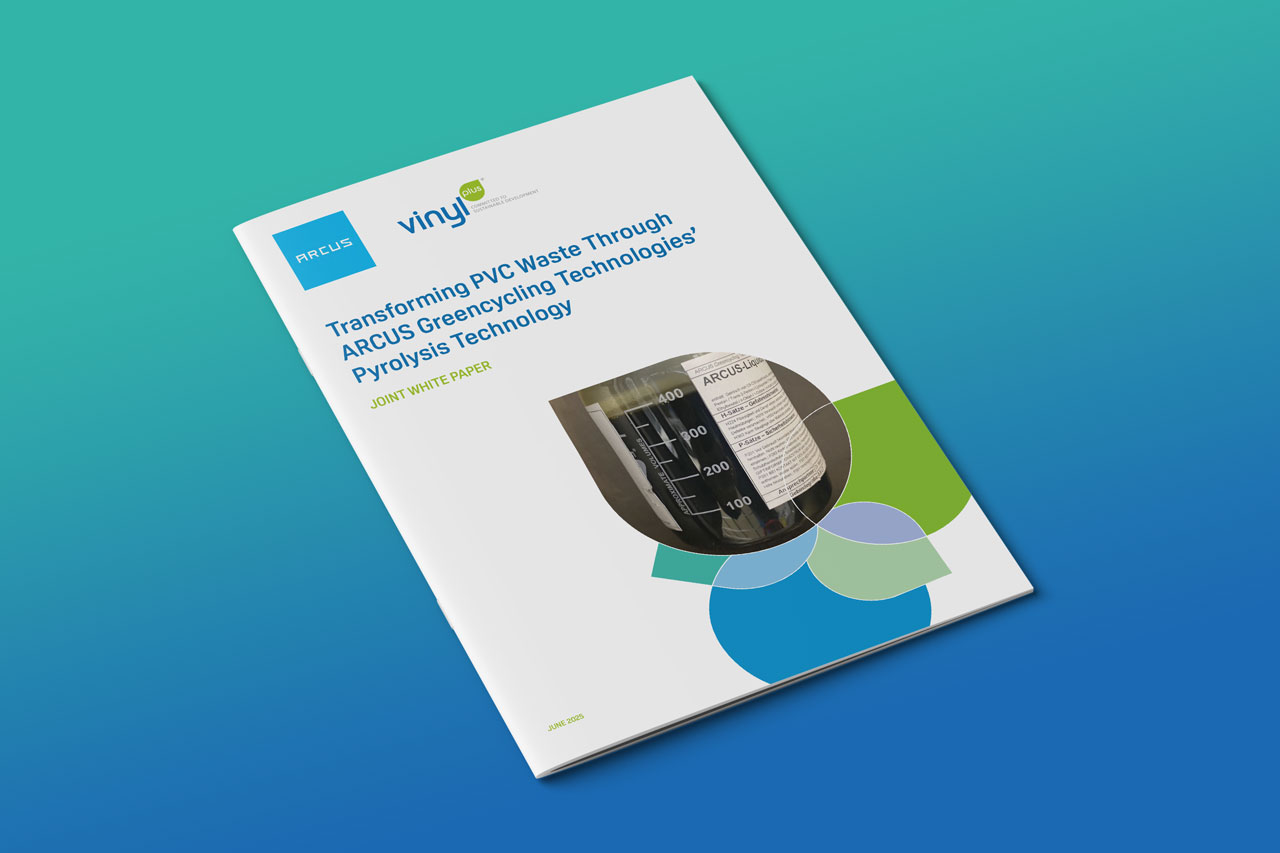
VinylPlus and ARCUS Greencycling Technologies published a joint white paper exploring pyrolysis as a complementary route for PVC waste streams that cannot be recycled mechanically or physically.
The work places pyrolysis in the wider context of advanced recycling, showing how PVC-containing feedstocks can be processed under controlled conditions with specific attention to chlorine management, feedstock quality and the suitability of the resulting pyrolysis oil for petrochemical value chains.
The project supports VinylPlus’ broader ambition to expand circularity beyond established mechanical recycling routes, while keeping mechanical recycling as the preferred option wherever technically and economically feasible.
Launch of the Vinyl & You interactive map
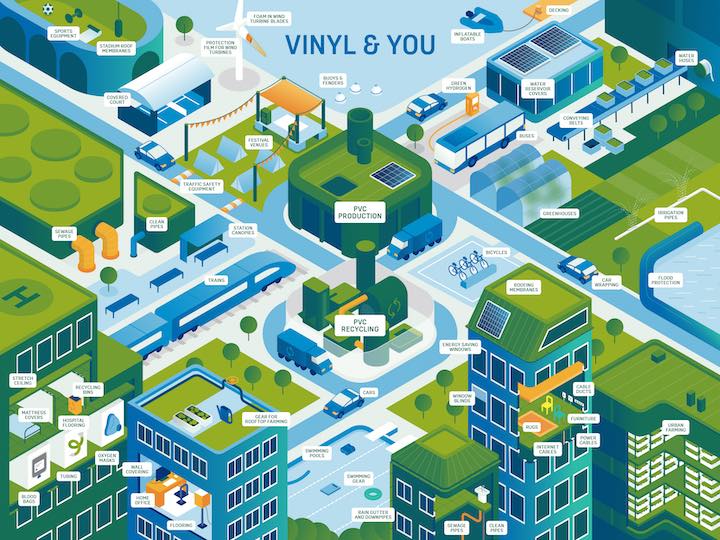
VinylPlus launched Vinyl & You, an interactive map showing the many ways PVC, or vinyl, supports everyday life across Europe.
The map presents vinyl applications across areas such as building and construction, healthcare, energy, water management, food production, electronics, mobility, sport and leisure. By making these applications visible in one accessible format, the tool helps explain how PVC contributes to modern living, essential services and Europe’s transition towards a more circular and resource-efficient economy.
Coordinated industry input to ECHA’s PVC investigation
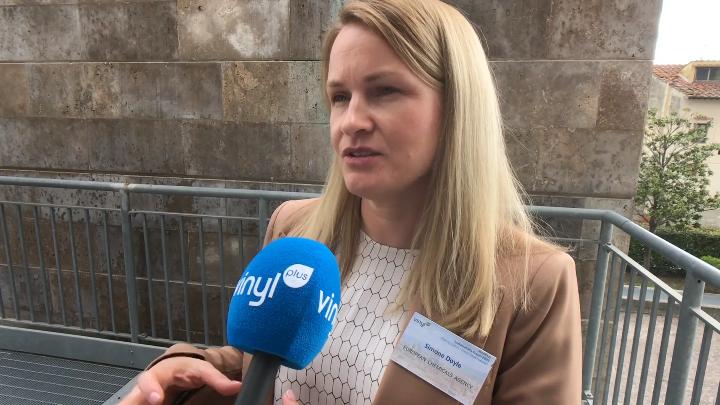
VinylPlus coordinated the European PVC value chain’s technical and regulatory work in response to ECHA’s investigation on PVC and PVC additives, which started in 2023.
The process included stakeholder dialogue at the VinylPlus Sustainability Forum 2023, where ECHA’s Simone Doyle took part in the discussion on PVC and additives. The work continued with VinylPlus’ comprehensive response in 2024, further dialogue with EU institutions and regulators, and a dedicated VinylPlus webinar with the participation of ECHA’s Simone Doyle, attracting more than 300 participants.
This reinforced VinylPlus’ role in supporting evidence-based discussions on additives, exposure, recycling and risk management.
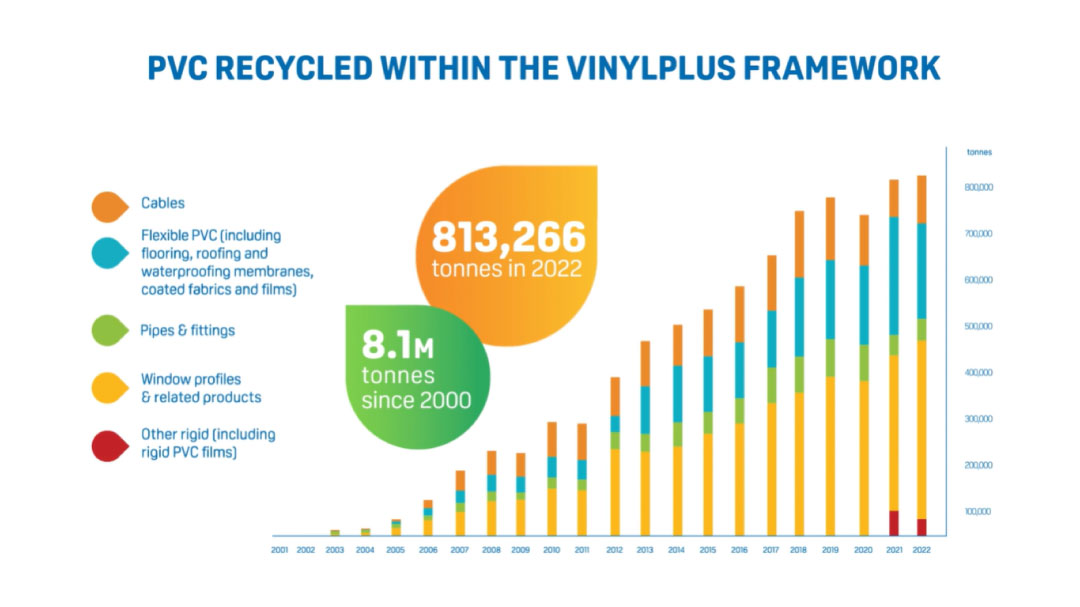
More than 800,000 tonnes of PVC recycled
In 2022, 813,266 tonnes of PVC waste were recycled within the VinylPlus framework, passing the 800,000-tonne mark for the first time.
By the end of 2022, the European PVC value chain had recycled 8.1 million tonnes of PVC since 2000, saving an estimated 16.2 million tonnes of CO₂.
This progress was supported by Recovinyl® and its RecoTrace™ data collection system, which monitors, verifies and reports PVC recycling and the use of recycled PVC in new products.
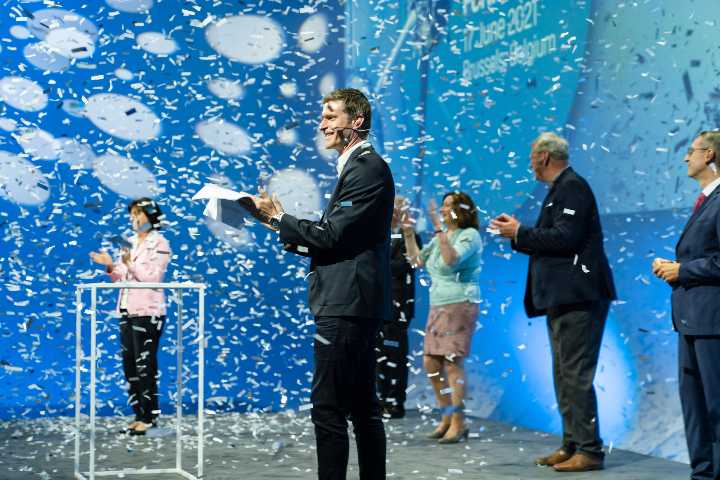
Launched in 2021 with a clear ambition
In June 2021, VinylPlus launched its 2030 Commitment: a 10-year roadmap for the European PVC value chain to advance circularity, reduce environmental impacts, strengthen transparency and contribute to sustainable development.
Building on more than 20 years of voluntary action, the Commitment set a new direction for PVC in Europe — from recycling and safe additives to carbon reduction, certification, partnerships and stakeholder engagement.